Energy Weeks
Energy Weeks helps students turn local energy challenges into shared cross-border solutions through practical, hands-on learning.
The problem
The problem is that the energy transition in the Austria–Czechia–Slovakia border region is often perceived as abstract, technical, or disruptive rather than as a shared local opportunity. Renewable energy projects can face low public understanding, limited community buy-in, and fragmented cross-border communication, even though the region faces common energy, climate, and cooperation challenges. The project therefore addresses a gap in energy literacy, regional dialogue, and public engagement, especially among young people and schools.
The solution
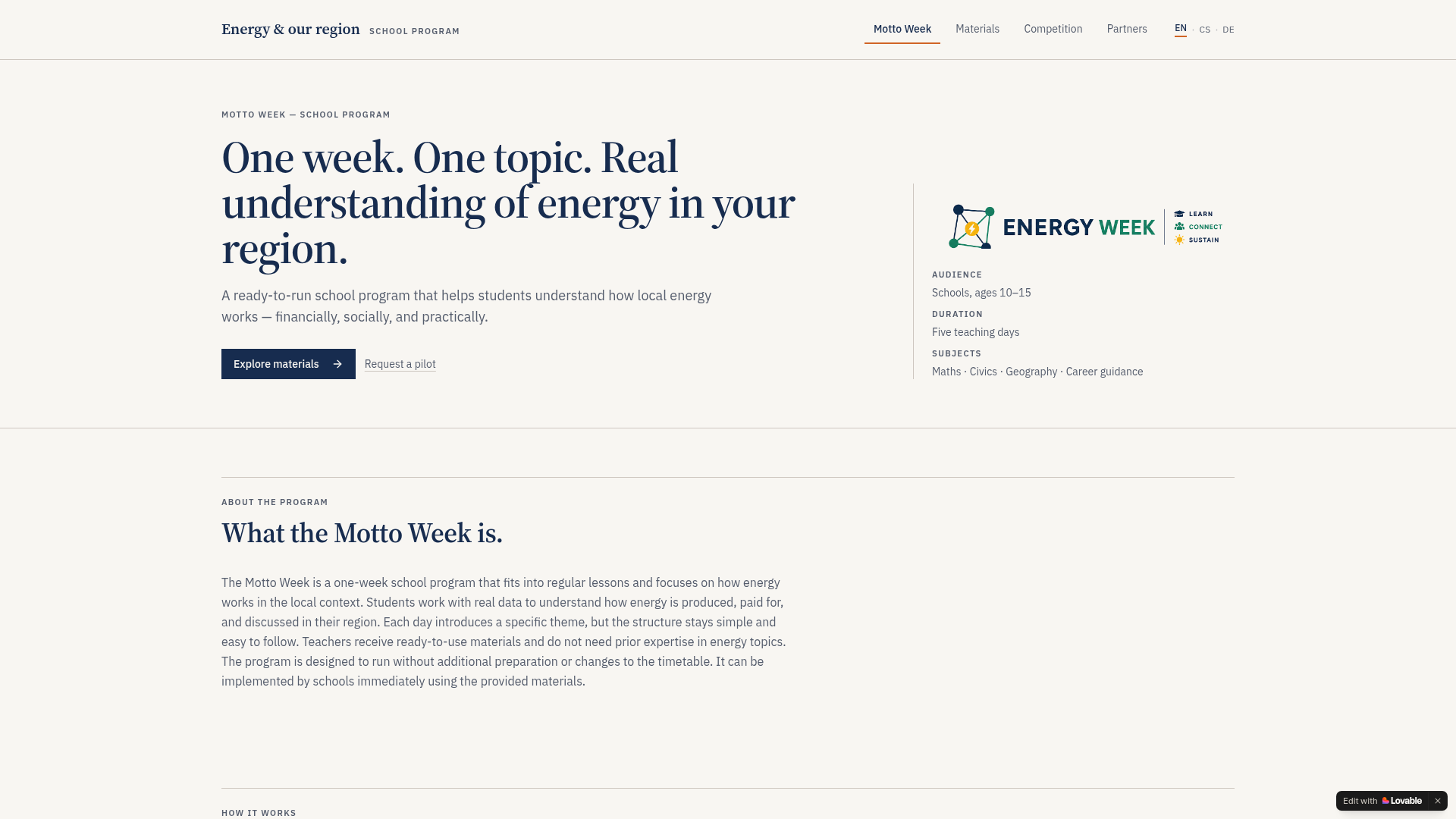
Our solution is Energy & Our Region, a Energy Week school programme that helps students explore renewable energy through their own local and cross-border context. Instead of presenting energy transition as a distant policy topic, the programme turns it into an accessible, practical and collaborative learning experience. It reframes renewable energy as a shared opportunity for communities, schools and neighbouring regions, supporting the broader Cross-Border Dialogue goal of turning regional challenges into concrete, actionable solutions.
Who it's for
The programme is designed primarily for students, teachers and schools, but it also matters for municipalities, local energy stakeholders and regional communities. It matters because young people will be directly affected by the energy transition and should understand how local choices, public acceptance and cross-border cooperation shape the future of their region.
What we built & tested
We built a structured educational prototype for a school-based Energy Week focused on energy in the region. The concept includes activities that help students connect renewable energy with local realities, community needs and cross-border perspectives. What was tested was not only the content itself, but also whether the format can make energy topics more understandable, engaging and relevant for young people by combining education, dialogue and practical regional examples.
Next step
The next step is to pilot the Energy Week with partner schools and regional stakeholders, collect feedback from students and teachers, and improve the programme based on what works in practice. After that, the project can be scaled as a reusable cross-border education tool for energy literacy, helping more schools in Austria, Czechia and Slovakia discuss renewable energy in a concrete, local and cooperative way. This is an inferred next step based on the project’s educational prototype and the Cross-Border Dialogue model of developing practical solutions through testing, feedback and collaboration.